ChatGPT, zero-click, and the future of travel blogs
AI takes tourists directly to service providers. For independent blogs, the challenge is to offer information that truly helps people choose.
AI is changing how we search for information. It's also changing how we reach websites. That shift could have big consequences for travel blogs. Independent publishers could feel it too.
It sounds contradictory: AI assistants may send fewer visitors to websites. Yet they may also send people directly to businesses.
From ChatGPT straight to a hotel's website
Imagine a tourist planning a weekend in Monopoli. They ask ChatGPT:
"What are three hotels near Monopoli's old town?"
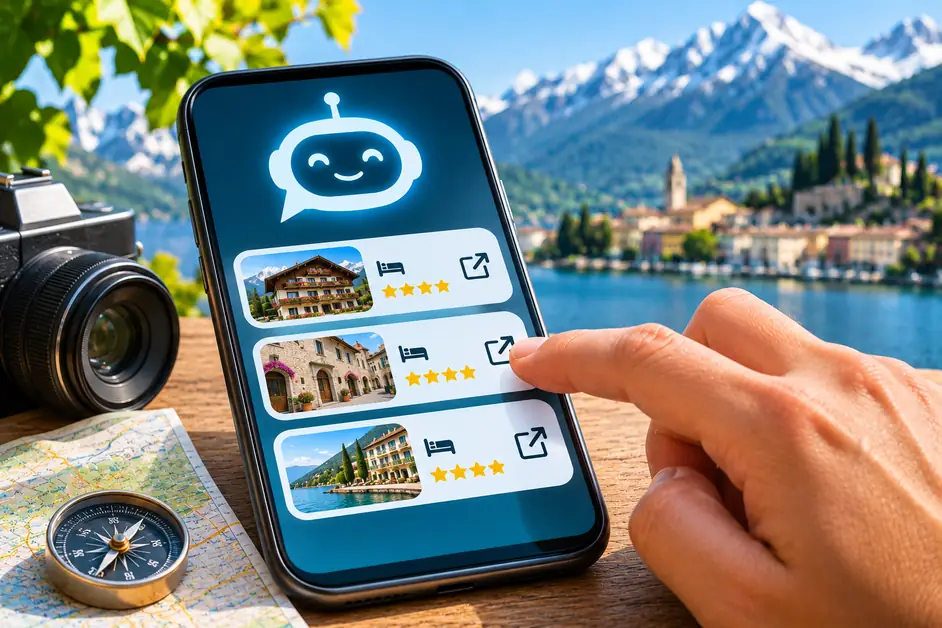
ChatGPT might suggest three hotels and describe each one. It could also make their names clickable.
After reading the answer, the tourist might open a hotel's website. There, they can check prices and availability or book.
They never need to visit a travel blog.
Previously, that tourist might have searched Google for "where to stay in Monopoli." They might have read an article comparing different neighborhoods. Then they would have visited a hotel's website.
Today, an AI assistant can handle some of that research.
Zero-click isn't disappearing: different sites get the clicks
A zero-click search gives you an answer without opening another website.
AI assistants can make this more common. They pull information from different sources into one answer.
But some questions need more than a quick answer.
Ask about Monopoli's best beaches, and ChatGPT's answer might suffice.
Look for a hotel, though, and you'll need more. You'll probably want to check availability, prices, and booking terms.
In that case, the assistant can take you straight there. You land on the hotel's website.
So informational sites may get fewer visits. Meanwhile, more remaining clicks may go to businesses. Those businesses sell products or services directly.
The total number of clicks doesn't have to rise. They can simply go somewhere else.
What does this mean for travel blogs?
Consider two more examples.
Renting a car in Bari. A tourist asks Gemini which rental companies operate at the airport. The assistant can compare options and link directly to them. The tourist might book without reading a car-rental article.
Taking an organized tour of Alberobello. Someone asks ChatGPT which tours leave from Bari. The assistant might suggest tour operators and link to them. That leaves less reason to read pages listing excursions.
In both cases, the risk for blogs is clear. AI may use them as sources without sending readers there.
This doesn't mean travel blogs are going away. But their role could change.
An article listing hotels, car rentals, or tour operators offers little. An AI assistant can already pull that information together.
But firsthand comparisons can still give readers a reason to visit. So can hard-to-find facts, practical warnings, and specific local details.
Getting seen isn't the only problem
For years, publishers worked to rank their articles on Google. They wanted to reach people researching a particular destination.
AI assistants create a different problem. Appearing in an answer doesn't mean readers visit your site. They may never see where the information came from.
And if the assistant links directly to a service provider? The blog may lose its role in the buying journey. It no longer connects the initial search with the purchase.
So this isn't just about SEO. It's about how traffic moves around the web.
A web with fewer middlemen?
I think we may be seeing a shift. People gather information through AI assistants. Then they visit company websites to book or buy.
That's a serious challenge for independent travel blogs.
Getting into ChatGPT answers or AI Overviews isn't enough. You also need to ask why someone would open your article. Especially after they've already received an answer.
Better titles, excerpts, and keywords won't solve that alone.
You need to add something the first answer lacks. That means current checks, documented comparisons, firsthand experience, and useful advice. The goal is to help people make better decisions.
What can a blog offer that a hotel website can't?
Travel blogs can't survive by repeating what ChatGPT already said.
A hotel can show its rooms and photos. It can let you book a stay. But it probably won't mention the parking problems nearby. Or the streets that get noisy at night. A place may look central on a map. Yet the beach could still be a long walk away.
That's where an independent blog can make a difference. It can compare options, spot problems, and check the facts. It can help travelers avoid bad choices.
The same goes for other travel services.
A car rental company lists its rates and vehicle types. A blog can compare terms across several companies. It can flag extra charges and explain pickup or return hassles.
A tour operator describes the trips it sells. A blog can ask whether the tour is worth buying. Could you get there on your own instead? It can compare costs, travel time, and flexibility.
Listing places to stay in Monopoli isn't enough anymore. You need to explain why one area suits someone better. What problems might they face? What trade-offs come with each choice?
Of course, you need to check and document those details. You can't just guess.
A direct link to a provider can't always replace that. Travelers need independent, practical information that puts them first. Not information shaped by whoever's selling the service.