Google's SpamBrain and the Fight Against Spam
SpamBrain by Google is an anti-spam system that continuously improves to ensure quality search results.
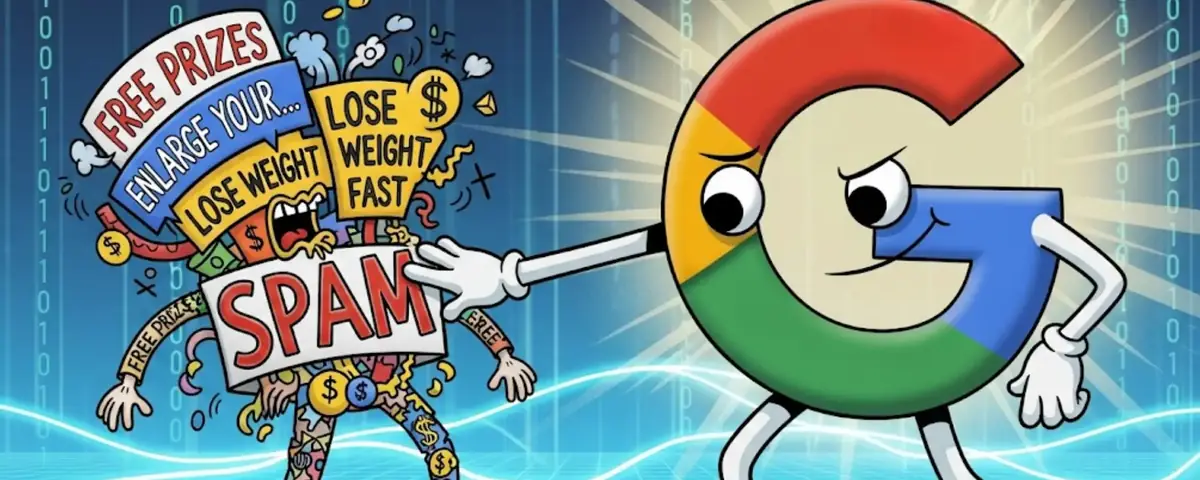
Imagine Google as a huge librarian who must decide which books (i.e., websites) to place on the most visible shelves for those searching for something. It wants only useful, true, interesting books on the shelves... and not trash, misleading ads, copied texts, or tricks to deceive people.
Here’s the deal: SpamBrain is Google’s super-intelligent anti-spam brain. https://spambrain.com/ It is an artificial intelligence (AI) system that works 24/7 to detect and discard (or hide at the back) sites that try to cheat or offer low-quality stuff.
Where it comes from and how it works Google created SpamBrain back in 2018 but revealed it to the world only in 2022. Since then, it has been continuously improved year after year. By 2025 and early 2026, it became even smarter thanks to ongoing updates.
How does it understand what is spam and what is not?
Think of a child learning to recognize dogs: at first, you show them thousands of photos of real and fake dogs, they look, compare, make mistakes, learn, and after a while, they become very good at it. SpamBrain does the same thing, but with billions of websites:
- It compares your site with thousands of sites already recognized as trash - It looks for suspicious patterns: repeated texts everywhere, bulk-bought links, content hastily written with AI just to fill space, identical chain-created pages - It notes if a site has been hacked and used to display strange ads - It understands if the links pointing to your site are natural (from people who genuinely appreciate you) or artificial (bought or exchanged to cheat)
And the crazy thing?
SpamBrain learns on its own! Every time Google updates the system (like in the spam updates of 2025), it gets better at recognizing the new tricks that web tricksters invent.
Result?
Google claims that thanks to SpamBrain, over 99% of searches are free from spam. In practice, when you search for something, you almost never find scam sites, nonsensical texts, or ads disguised as real articles at the top.
What types of bad habits are most affected in 2026
- AI-generated content produced in bulk with no real value (like 200 almost identical articles on the best smartphone of 2026 with copy-paste) - Spam links: buying or exchanging hundreds of links to pretend to be authoritative - Hacked sites used to insert hidden ads - Doorway pages: creating useless pages just to attract clicks and then redirecting elsewhere - Very low-quality content that exists only to rank, not to genuinely help readers
When SpamBrain catches these things, it doesn’t always delete the site forever (although sometimes it does). Often it drops the site significantly in rankings or removes it entirely from main results.
And the worst part?
It’s not a punishment that lasts for a month and then goes away: once the brain has labeled you as suspicious, it takes time and real work to convince it that you have changed.
What it means for those with a site or blog (even small ones)
If you do things right – writing useful, original content with passion, genuinely helping people who come from the search engine – SpamBrain is your friend. It hardly ever touches you.
But if you’ve tried to be clever with: - automatic articles thrown together - bought links - hundreds of similar pages created just for SEO... ...then in the latest updates of 2025-2026, many have seen significant drops in traffic. It’s not bad luck: it’s SpamBrain that has learned to recognize them better.
So Google’s message in 2026 is clear: Create genuine, useful, honest content... and SpamBrain will leave you alone. Otherwise... goodnight to your rankings!