The Uncanny Valley and the Future of Human-Like Robots
The uncanny valley describes the discomfort towards almost human robots, impacting the future of companionship.
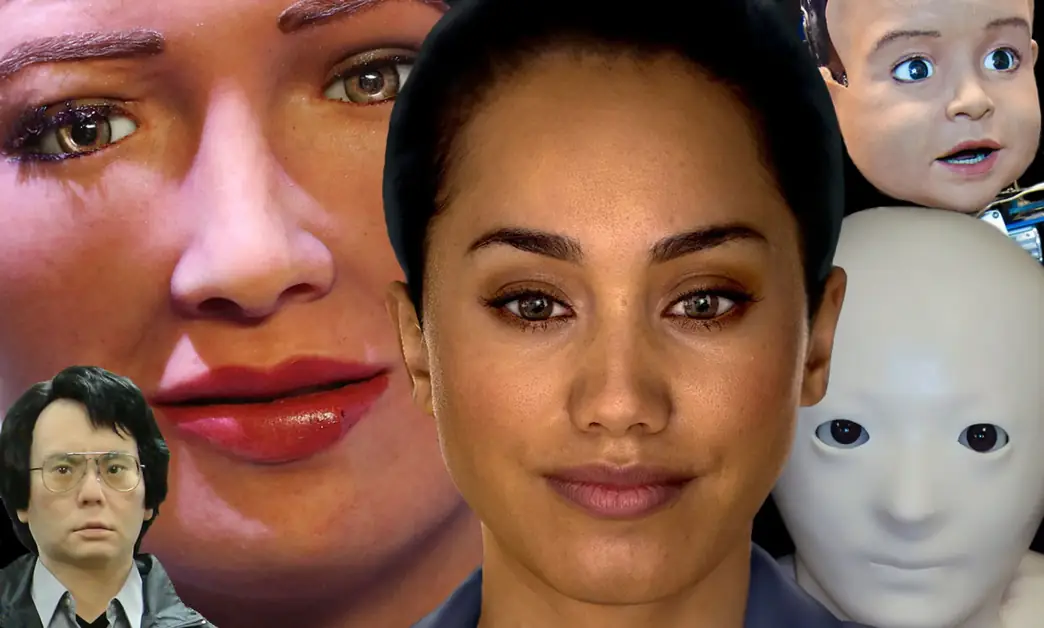
The uncanny valley is a psychological phenomenon first described in 1970 by Japanese roboticist Masahiro Mori. In summary, as a robot, avatar, or digital character resembles a human more closely, our sympathy towards it increases... up to a point. When it becomes 'almost human' but not perfect, a strong discomfort arises, a feeling of repulsion or unease. Only when the resemblance is total (i.e., indistinguishable from a real person) does the affinity rise again. Mori illustrated this with a simple graph: on the horizontal axis is the degree of human likeness, and on the vertical axis is the level of empathy or comfort. The line rises gradually, then drops into a deep 'valley' (the creepy moment), and finally rises steeply towards real humanity.
Why does this happen?
Our brain is wired to recognize humans in fractions of a second. When something appears human but has wrong details – mechanical movements, a vacant stare, skin that is too smooth or cold, unnatural micro-expressions – a cognitive conflict arises. The brain expects a human but detects 'anomalies'. This generates disgust, similar to what we feel towards a corpse or a disease: it is an evolutionary alarm mechanism. Movement exacerbates everything: a stationary robot may seem just strange, but one that smiles, walks, or looks you in the eye amplifies the effect (Mori noted this back in 1970 with a robot that smiled unnaturally). In 2026, this concept is more relevant than ever. Robots like Moya from DroidUp (Shanghai), with warm skin (32–36 °C), rich facial expressions, and 92% human-like walking, enter the uncanny valley. Many find them fascinating, while others label them as 'creepy' or 'unsettling' (New York Post, TechRadar). It is the classic transition point: realistic enough to deceive somewhat, but not enough to cross the barrier. Implications for the Future of Companionship If we overcome the uncanny valley (with more advanced embodied AI, perfect mimicry, realistic touch), robots could become true companions: for lonely elderly, people with emotional disabilities, or even affectionate relationships. But there is a downside: